A boundary is only useful if you understand what crosses it.
Before redrawing your OT architecture, map what the plant actually depends on.
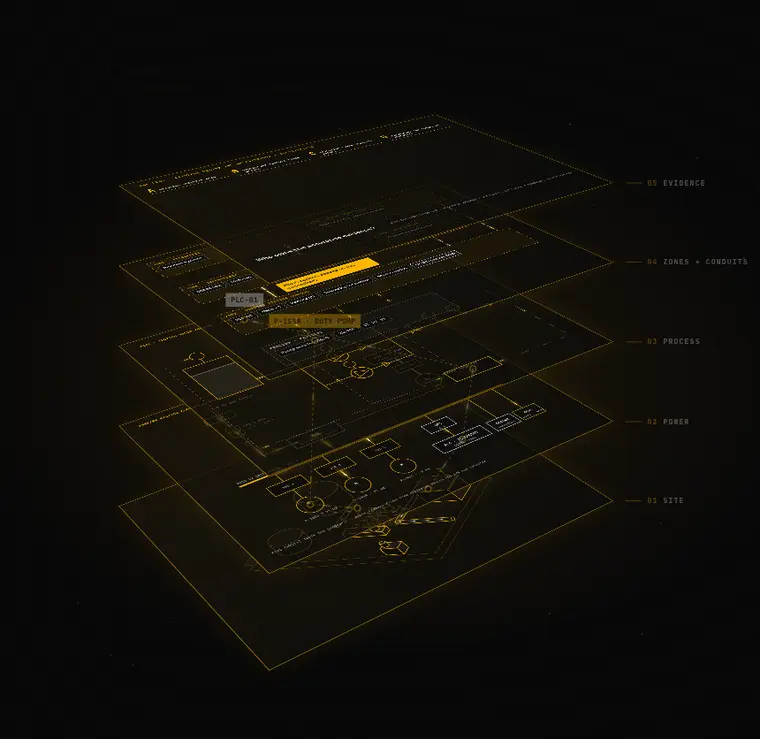
The duty pump, running at 412 m³/h. Scroll through its power, its process, its network and the evidence behind them.
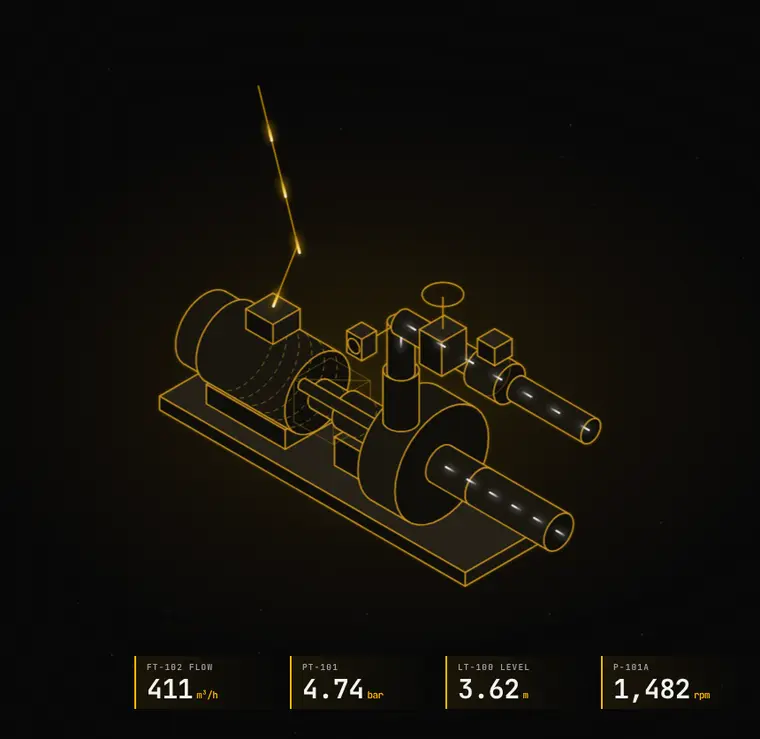
A pump is a physical promise: pressure, flow, uptime.
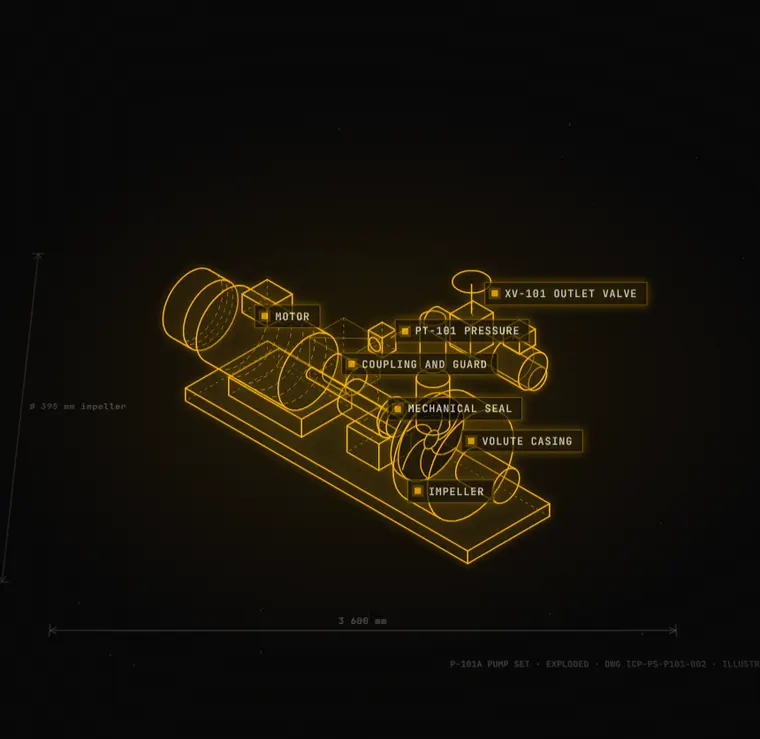
Motor, coupling, impeller, casing and seal deliver it. The valve and transmitter tell the control system whether it is being kept. Select a part.
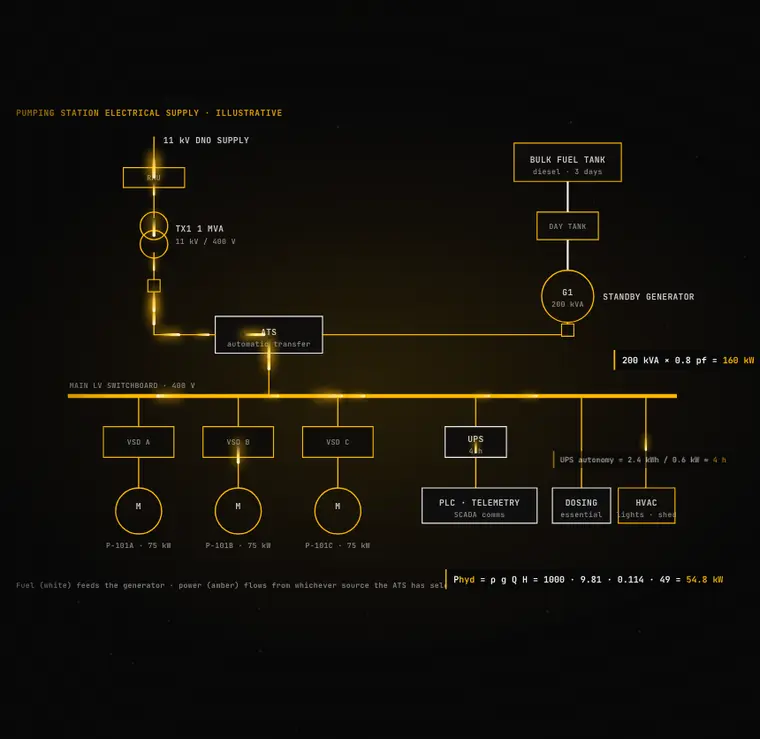
What keeps the water moving when the grid doesn’t?
Mains comes in at 11 kV. If it fails, the transfer switch starts the diesel generator — which carries the duty pump, not all three. The UPS keeps the PLC and telemetry alive through the gap.
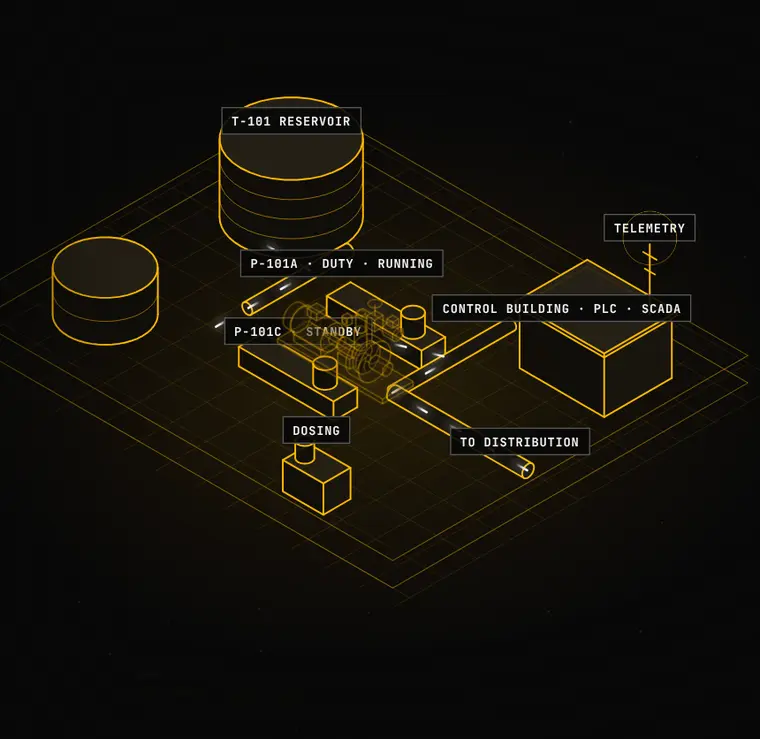
Three pumps, one reservoir, one outlet — and a radio mast.
Water is drawn from T-101 through the suction header, lifted by the duty pump and sent to distribution. Dosing, the control building and a telemetry mast complete the station.
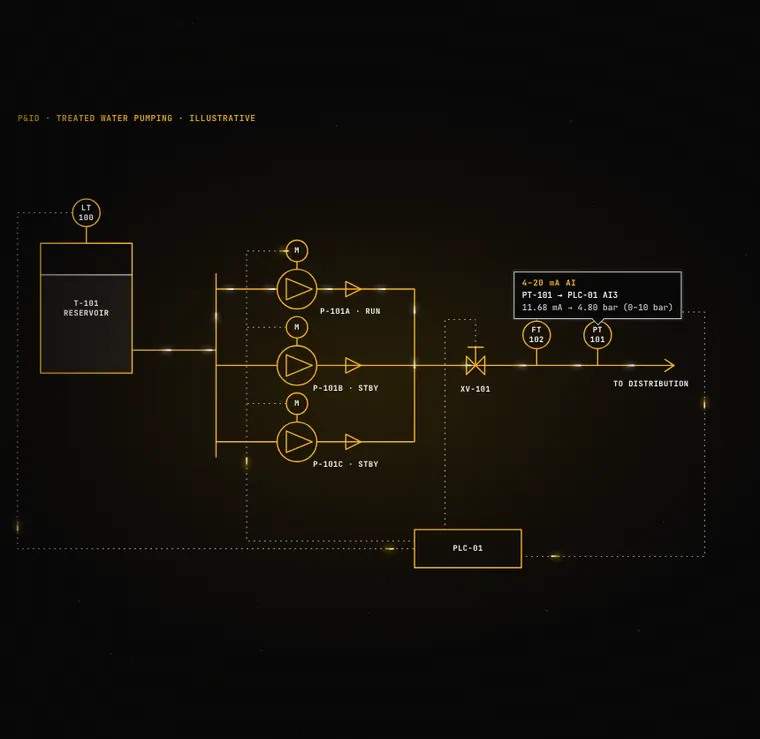
Every instrument becomes a signal. Every signal has a path.
LT-100 reports reservoir level, PT-101 and FT-102 what the duty pump delivers. PLC-01 decides which pump runs and how fast. The P&ID shows the process — not yet who else can talk to the PLC.
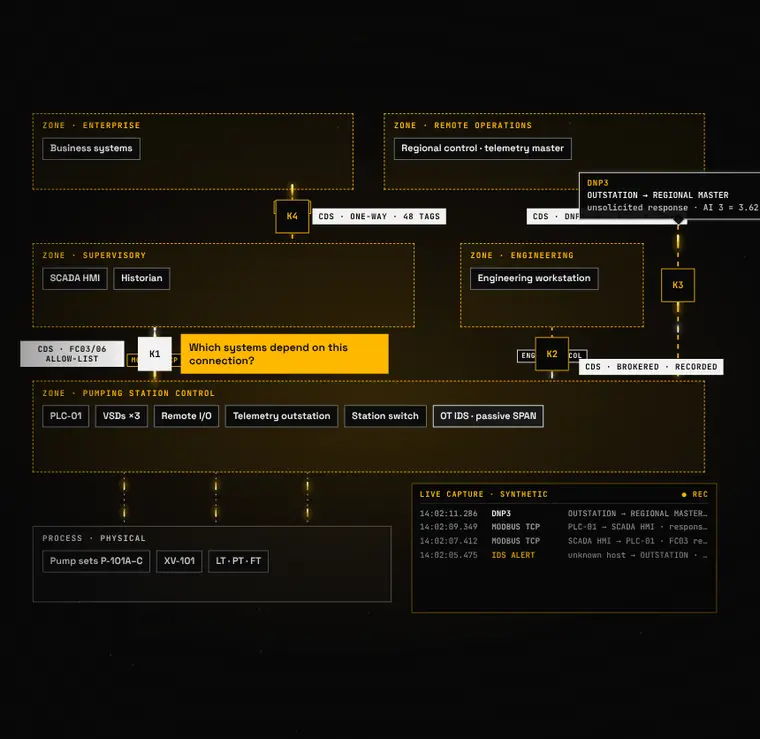
Drawing boxes is easy. Knowing what crosses them is the work.
NCSC CROSS DOMAIN DESIGN PRINCIPLES APPLIED ON EVERY CONDUIT · A PASSIVE OT IDS WATCHES THE STATION SWITCH
NCSC CROSS DOMAIN GUIDANCE · SIX DESIGN PRINCIPLES
Protocol break at the PLC firewall; Modbus FC03/06 only, registers 40001–40030; setpoints range-checked; FC16 from any other host dropped
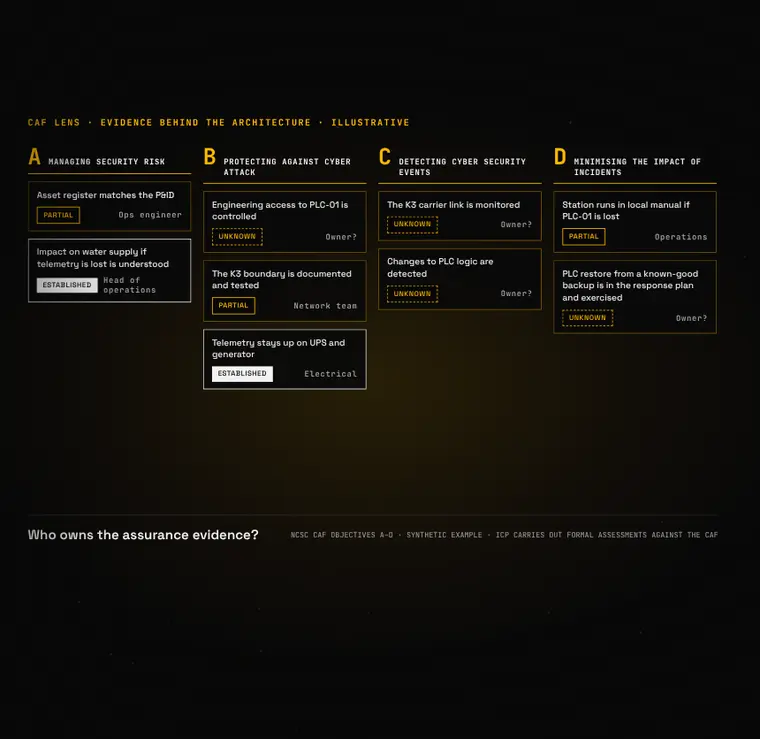
Assurance is evidence someone owns.
The NCSC CAF asks whether you manage risk, protect, detect and minimise impact. Asked of this station, some answers are established, some partial, and some have no owner at all yet. ICP can take this through to a formal CAF assessment.
Power, process, network and evidence — one architecture.
ICP reads your SLDs, P&IDs and network drawings, builds the dependency map and zone model, and checks every boundary against the evidence behind it, with NCSC cross domain principles on every conduit. An engineer signs every finding. Aligned to IEC 62443 — and ICP carries out formal assessments against the NCSC CAF.